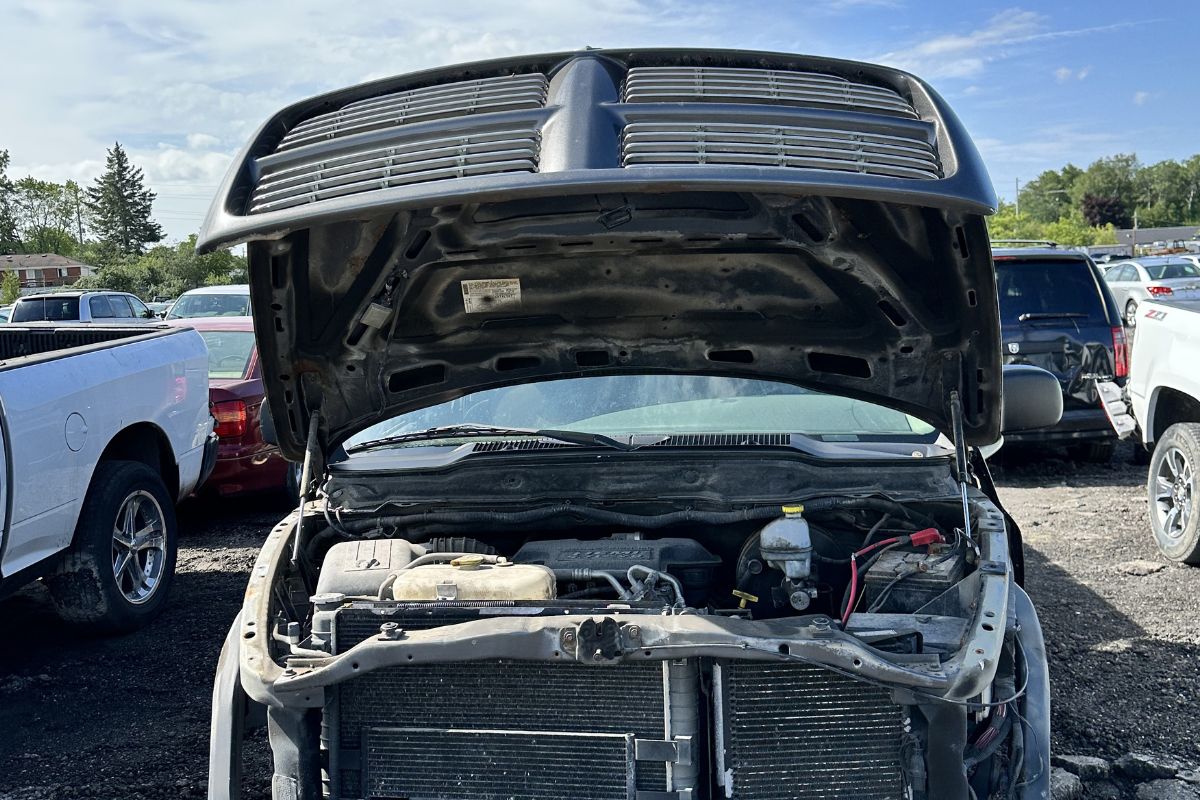
A Bentley, a Skyline GT-R, or even a classic muscle car in a scrapyard sounds unbelievable, but it happens more often than you might think. The journey that brings these vehicles there is where the story gets interesting.
Most people picture dented sedans and beat-up pickup trucks when they think of an auto recycler. Rows of rusted steel, stripped-out interiors, cracked dashboards. That is the mental image. But people who actually work in recycling yards will tell you something different. Every few weeks, sometimes more often than that, something genuinely surprising rolls through the gate.
A low-mileage European sports car. A hand-built import that never officially sold in North America. A factory-original muscle car that somehow survived five decades and still has matching numbers. These vehicles show up quietly, usually because an estate got cleared out or an owner hit a repair bill that made no financial sense. The cars themselves are extraordinary. The stories behind them are often even more so.
Why Rare and Luxury Cars End Up at Recycling Yards
This is the part that surprises most people. A car worth tens of thousands of dollars, sometimes more, sitting in a recycling yard. It seems wrong. But there are very specific and very logical reasons it happens.
The repair cost problem
Luxury and exotic vehicles have parts that are expensive in a way that defies common sense. A single electronic control module on a high-end European sedan can run over $4,000. A transmission rebuild on a mid-2000s Italian sports car can exceed the car’s private-sale value. When a vehicle hits that crossroads, owners, especially those who inherited it or bought it years ago for much less, make the practical call.
Estate clearances
This is one of the most common paths. A collector passes away. The family does not know what they have. The vehicle gets handed to an estate dealer or auctioned off, and if it does not move quickly, it finds its way to a wrecker. It happens far more often than people realise.
Flood and accident write-offs
Insurance companies total vehicles based on repair cost versus current market value. A luxury car with moderate flood damage might be economically totalled even if the engine is perfectly fine. Those vehicles get sold to salvage, and that is exactly where recyclers see some of their most interesting incoming stock.
Grey market imports with no parts support
Some imported vehicles were never sold in North America officially. When they need repairs, there is simply nowhere local to source parts. Owners give up. The car ends up at a wrecker, where it becomes a parts vehicle for other owners across the country who are in the same situation.
Types of Interesting Cars Recyclers Actually See
1. Rare Japanese Domestic Market (JDM) Imports
The JDM collector market exploded over the last decade. Vehicles like the Nissan Skyline GT-R R32 and R33, the Honda Beat, the Mitsubishi Delica Space Gear, and various Subaru Sambar kei trucks have been arriving in North America since the 25-year import rule opened them up for road use.
Not all of these make it long. Some arrive in poor mechanical condition, which was not fully disclosed. Others get into accidents. A few come in simply because the owners underestimated how difficult and expensive it is to maintain a vehicle with no local dealership support and parts that ship from Japan.
2. Classic European Sports Cars
Think Alfa Romeo Spider, Lancia Fulvia, Porsche 914, early BMW 2002, Triumph TR6. These cars are small, old, and mechanically specific. When they arrive at a recycler, it is almost always because the restoration cost exceeded what the owner was willing to spend, or the vehicle sat in a garage for twenty years, and the mechanical situation became genuinely dire.
The interesting thing about these cars is that body panels, chrome trim, and interior pieces in decent condition are extremely hard to find. A recycler who has one of these sitting in the yard is quietly sitting on parts that restoration specialists will pay real money for.
3. Low-Production American Muscle and Specialty Vehicles
Not every muscle car from the late 1960s and early 1970s that shows up at a wrecker is a garden-variety small-block coupe. Sometimes it is something rarer. A Chevelle SS 454. A numbers-matching Dodge Challenger R/T. A Plymouth Hemi ‘Cuda that has been repainted and driven into obscurity by owners who never knew what they had.
These vehicles appear at recyclers more often than the general public would expect, precisely because vehicle history was poorly documented before the internet era. A lot of significant cars ended up treated as ordinary transportation.
4. High-End European Sedans and SUVs
Mercedes-Benz S-Class, BMW 7 Series, Range Rover, Bentley Continental, and similar vehicles show up at recyclers fairly often, and for very clear reasons. These cars depreciate steeply once out of warranty. A 10-year-old Bentley might have a private sale value of $30,000, but if it needs an air suspension rebuild and an electrical issue sorted, the repair estimate can top $20,000 easily. Owners walk away.
For the recycler, these are excellent inventory. Luxury vehicles carry expensive branded components: genuine leather trim, high-end audio systems, complex adaptive suspension parts, and multi-zone climate control modules. Buyers who own the same model and need a specific part will pay well to source it from a salvage yard rather than a dealer.
Also Read: Smart Tips to Buy Used Car Parts from Licensed Auto Wreckers in Ontario
5. Speciality and Low-Volume Vehicles
This category is wide. It includes:
- Hummer H1 (civilian): Built in extremely low numbers, parts are scarce and expensive
- Panoz Esperante: A hand-built American sports car that most people have never heard of
- Vector W8: So few were made that even seeing one is notable
- Dodge Viper GTS: Relatively rare to begin with, expensive to repair, and occasionally ends up with a salvage title
- Saab 9-3 Aero: A niche European brand that no longer exists, making parts increasingly hard to find
What Happens to These Vehicles at the Yard
When a rare or exotic vehicle comes through a responsible auto recycler, there is a process that goes well beyond simply crushing it.
- Documentation first: Good recyclers photograph the vehicle thoroughly on arrival. This matters for parts identification, parts listing, and historical record.
- Parts assessment: On a luxury vehicle, this list is long: body panels, trim pieces, glass, interior components, suspension parts, drivetrains, and electronics.
- Specialised listing: Rare parts do not sell through generic auto parts channels. Recyclers who know their inventory list JDM components on JDM-specific communities, list European parts on forums and speciality platforms, and in some cases reach out directly to restoration shops.
- Scrap car removal of non-salvageable material: What cannot be reused gets properly recycled. Fluids are drained and disposed of safely. Metal is processed. No responsible recycler lets hazardous materials sit.
How Recyclers Identify What They Have
Not every yard worker is an automotive historian. But experienced recyclers develop a genuine eye for vehicles that are out of the ordinary. A few things they look for:
- Build plates and VIN decoding: Factory codes reveal original engine, trim, and options packages
- Unusual badging or trim details: A car with an obscure badge often means a limited edition or import model
- Non-standard steering placement: Right-hand drive on a domestic-registered vehicle is an immediate flag for an import
- Low production stampings: Some manufacturers stamped trim codes that directly indicate option packages
Conclusion
Auto recycling is a more interesting business than it gets credit for. Behind the chain link fences and the stacked rows of stripped vehicles, there are genuinely rare, historically significant, and sometimes one-of-a-kind machines that made their way there through circumstance rather than irrelevance.
If you have a vehicle that has reached the end of its road, working with a reputable recycler means it gets handled properly. Greenway Auto Recycling is one operation that takes this seriously, giving vehicles a thorough assessment before anything else happens. Because sometimes what looks like scrap is actually something worth preserving, even if only in parts.