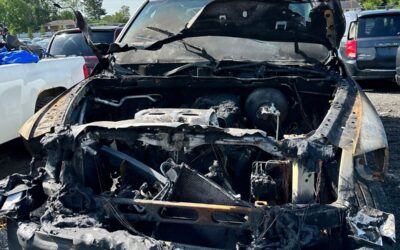

Most people have no idea what actually happens after a car reaches a scrapyard. Behind the gates, massive industrial machines tear down, sort, and recycle entire vehicles in minutes with incredible precision.
Most people think of a scrapyard as a quiet graveyard where old sedans go to rust under the sun, but the reality is much more like a high-speed operating room. When a vehicle reaches the end of its life, it enters a carefully structured dismantling process. Instead, it meets a series of massive specialised machines designed to strip, crush, and recycle every single ounce of metal and plastic in record time.
We are talking about a process that used to take days of manual labour and is now finished in a matter of minutes. It is a brutal yet impressive display of engineering efficiency. A two-ton vehicle is transformed into organised piles of reusable raw material ready for smelting.
Why the Right Equipment Matters in Car Dismantling
Car dismantling is not just about breaking things apart. It is about doing it efficiently, safely, and in a way that allows maximum material recovery. A modern salvage yard handles hundreds of vehicles every week. Without the right machinery, that volume is simply not possible. Faster processing also increases the value recovery from each vehicle by reducing labour time and improving material separation.
There is also the environmental side. Vehicles contain fluids such as engine oil, coolant, transmission fluid, and refrigerant. These have to be drained before any crushing or shredding takes place. The equipment designed for dismantling handles all of this in a structured sequence.
The Equipment That Does the Heavy Work
1. Depollution Rigs
Before any physical dismantling begins, the vehicle goes through a depollution stage. A depollution rig is a specialised workstation where all hazardous fluids are extracted from the car in a controlled manner.
What gets removed:
- Engine oil
- Coolant and antifreeze
- Brake fluid
- Power steering fluid
- Transmission fluid
- Air conditioning refrigerant (recovered separately with certified equipment)
- Fuel remaining in the tank
2. Vehicle Lift and Rotating Platforms
Once depolluted, the car often goes onto a rotating platform or tilt-table lift. This allows workers and equipment to access the underside of the vehicle without a separate pit. These platforms can spin the car on its side or tilt it at an angle, which makes removing catalytic converters, exhaust systems, and fuel tanks far quicker.
3. Hydraulic Shears and Grapples
These are the machines you will see operating on the yard floor, usually attached to excavators or purpose-built arms. Hydraulic shears work exactly like giant scissors. They can cut through a car body, engine block, or thick steel frame with very little effort.
Grapples, on the other hand, are claw-like attachments used to grab, move, and position vehicles and scrap piles. They are often used in combination with shears. The operator grips a section of the car with the grapple, repositions it, and the shear cuts through it. Together, they reduce a stripped shell into manageable pieces in minutes.
Typical capacity of industrial hydraulic shears:
- Cutting force: 500 to over 1,000 tonnes
- Blade material: Hardened tool steel
- Cycle time: 5 to 15 seconds per cut
4. Car Balers
A car baler is one of the most recognisable pieces of auto salvage yard equipment. It compresses a stripped car body into a dense, compact block of scrap metal. These blocks are much easier to transport and stack, and they feed directly into metal smelting operations. There are two main types:
| Type | How It Works | Best For |
| Horizontal Baler | The vehicle is pushed horizontally into a chamber and compressed from multiple sides | High-volume yards with conveyor feeding |
| Vertical Baler | The vehicle is dropped into a chamber and pressed from above | Smaller yards, manual feeding |
Also Read: The Scrap Car Glossary: Key Terms You Should Know
5. Auto Shredders
This is where things get dramatic. An auto shredder machine is essentially a giant hammer mill. The stripped and possibly pre-baled car body goes in one end and comes out the other as fist-sized chunks of mixed material in a matter of seconds.
Inside the shredder, a spinning rotor with heavy steel hammers impacts the material at high speed, tearing it apart. Once shredded, the mixed output goes through a series of separation systems to sort steel, non-ferrous metals, and shredder residue (non-metallic materials like foam, plastic, and rubber).
Post-shredder separation equipment typically includes:
- Magnetic drums and overhead magnets: pull out ferrous (iron and steel) metals
- Eddy current separators: separate non-ferrous metals like aluminium and copper
- Air classifiers: remove lightweight materials like foam and fabric
- Sensor-based sorters: identify and separate specific materials using optical or X-ray detection
6. Fluid Drainers and Oil Extractors
Separate from the depollution rig, individual fluid extraction units are used during more detailed manual dismantling. These include:
- Vacuum-based oil extractors for draining engines before removal
- Refrigerant recovery machines that capture A/C gases to prevent atmospheric release
- Fuel extractors for safely removing petrol or diesel from tanks
7. Parts Cleaning and Testing Equipment
Not everything from a dismantled car goes to the shredder. Usable parts like alternators, starters, gearboxes, and engines get tested and cleaned before resale. Equipment used at this stage includes:
- Ultrasonic cleaning tanks: remove grease and carbon deposits without damaging components
- Pressure washers and steam cleaners: surface cleaning for body panels and larger parts
- Electrical testers: check whether electronic modules and sensors still function
- Compression testers: verify engine health before a used engine is listed for sale
How a Car Moves Through a Dismantling Facility
To put it all together, here is the typical sequence a vehicle follows from the moment it arrives:
- Intake and assessment: vehicle is logged, evaluated for reusable parts
- Fluid removal: the depollution rig removes all hazardous liquids
- Parts harvesting: high-value components are manually removed
- Body shell processing: the shell goes to the shear or baler
- Shredding: material is shredded and sorted
- Material dispatch: sorted metals go to smelters, residue to approved disposal
Conclusion
Car dismantling is a precise, equipment-heavy operation. Depollution rigs, hydraulic shears, balers, and industrial auto shredders each handle a specific part of the process, and together they make it possible to recover the vast majority of materials from a scrapped vehicle.
If you are looking for a facility that takes this seriously, Greenway Auto Recycling is worth knowing. We handle the full dismantling and recycling process with the right equipment and proper practices, which matters both for the environment and for getting fair value from your old vehicle.