Scrap Car Recycling From Driveway to Your Nearest Scrapyard
When a car reaches the end of its useful life, it doesn’t necessarily become waste. Many of its components can still be reused, while materials such as steel, aluminium and copper can be recovered and processed for other purposes. Even materials that cannot be reused need to be handled and disposed of properly.
But what actually happens after a scrap car is picked up from someone’s driveway?
The vehicle goes through several stages, including collection, inspection, depollution, parts removal, crushing and material recovery. Understanding how this process works helps vehicle owners see why responsible auto recycling is important.
Let’s look at how a scrap car makes its way from a driveway to a recycling plant in Ontario.
1. Your Scrap Car Is Evaluated
The process usually begins when a vehicle owner contacts an auto recycling company or scrap car buyer to arrange a pickup.
There are several reasons someone might decide to scrap a vehicle. It could be sitting unused in a driveway, have major accident damage, suffer from mechanical problems or simply cost too much to repair.
Before providing a quote, the recycling company will usually ask for some basic information about the vehicle. This helps them assess its condition and potential value.
The information may include:
- Make, model and year: Helps identify the vehicle and its specifications.
- Condition: Whether the car starts, runs or has suffered accident damage.
- Major components: Whether important parts such as the engine, transmission and catalytic converter are still present.
- Location: Where the vehicle needs to be collected from.
- Ownership: Confirmation that the person arranging the sale has the right to transfer ownership.
The company will use these details to provide an estimated quote. The amount offered can depend on the vehicle’s weight, condition, usable parts, missing components and current scrap metal prices.
Once the offer is accepted, a collection time can be arranged.
2. Prepare the Car for Collection
Once the pickup has been scheduled, there are a few things you should do before the collection team arrives.
The first is to remove all personal belongings from the vehicle. Check the glove compartment, boot, centre console, door pockets and underneath the seats. Items such as important documents, sunglasses, garage door openers and toll tags can easily be overlooked.
You should also remove your licence plates before handing over the vehicle. Keep the plates and the plate portion of your vehicle permit, as you may need them for future registration or other purposes.
The collection team may also check the vehicle to confirm that its condition matches the details provided when the quote was arranged.
How Will the Car Be Transported?
A scrap car doesn’t need to be roadworthy to be collected. Even if it won’t start or has suffered severe damage, it can usually be transported using suitable towing equipment.
Depending on the vehicle’s condition and where it is parked, the collection team may:
- Load the vehicle onto a flatbed tow truck if it can roll.
- Use additional equipment if the wheels are damaged or unable to move.
- Take extra care when removing a vehicle from a narrow driveway or underground parking area.
Once loaded and secured, the vehicle will be transported to an auto recycling or processing facility.
3. The Car Arrives at the Recycling Plant
When the vehicle reaches the recycling facility, it is recorded and assessed before further processing.
At this stage, it is treated as an end-of-life vehicle (ELV). The team will examine its condition and identify the materials and components that may need to be recovered or removed.
This assessment helps determine how the vehicle will be processed.
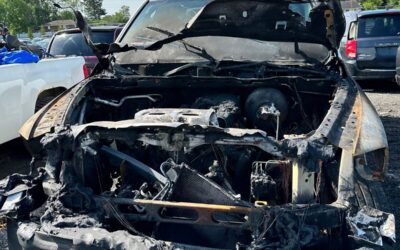
For example, a car that has suffered minor damage may still have several usable components, such as doors, mirrors, an engine or transmission. A severely damaged or burned vehicle may have fewer parts suitable for reuse.
The vehicle may then be moved to a designated storage or processing area while it awaits the next stage.
4. Remove Hazardous Fluids and Materials
One of the most important stages of vehicle recycling is depollution.
A vehicle contains several fluids and materials that need to be handled carefully. If they leak into the surrounding environment, they can contaminate soil and water or create other safety risks.
Ontario Regulation 347 requires specific materials to be removed before an end-of-life vehicle can be crushed, sheared or shredded. Additional handling requirements apply under Ontario Regulation 85/16.
What Fluids Are Removed?
Common automotive fluids that require proper recovery and handling include:
| Vehicle fluid | Why it needs proper handling |
|---|---|
| Engine oil | Can contaminate soil and water if released into the environment. |
| Transmission fluid | Needs controlled collection and appropriate management. |
| Coolant and antifreeze | Can be harmful to people, animals and the environment. |
| Brake fluid | Must be collected and handled appropriately. |
| Power steering fluid | Can cause environmental contamination if improperly released. |
| Fuel | Creates fire and contamination risks if not safely recovered. |
| Air conditioning refrigerant | Requires specialised recovery equipment and appropriate handling. |
The collected fluids are stored in suitable containers to prevent leaks and spills. Depending on their type and condition, they may be sent for re-refining, recovery, treatment or approved disposal.
Ontario Regulation 85/16 also specifies how fluids must be removed at regulated end-of-life vehicle waste disposal sites. This includes using an impermeable surface with spill containment and a covered structure that prevents precipitation from contacting the fluids or the components being drained.
What Happens to the Battery and Other Hazardous Components?
The vehicle battery is removed and sent through an appropriate battery recovery or recycling channel. Lead-acid batteries contain lead and corrosive electrolyte, so they cannot simply be treated as general waste.
Other components may also require special attention.
- Mercury switches: Older vehicles may contain mercury switches that need to be identified and removed.
- Lead-containing components: Certain battery cable connectors and wheel weights contain lead and must be handled appropriately.
- Tyres: These are removed and sent through suitable tyre recovery or recycling channels.
- Asbestos-containing materials: Some older vehicle components may contain asbestos. Where asbestos waste is identified, it must be handled and removed in accordance with applicable requirements.
- Hybrid and electric vehicle batteries: High-voltage battery systems require appropriate isolation and handling by trained personnel. Damaged battery packs can create serious electrical and fire hazards.
Air conditioning refrigerants also require proper recovery before the relevant equipment is dismantled or disposed of.
Once the necessary materials have been removed and managed, the vehicle can move on to further processing.
5. Remove and Sort Reusable Parts
A car may no longer be safe or economical to drive, but that doesn’t mean every component has reached the end of its useful life.
After the necessary depollution work, the recycling team can identify parts that may still be suitable for reuse.
The condition of each component matters. Its age, mileage, accident history, physical condition and demand for replacement parts will all influence whether it can be recovered.
Common examples include:
- Engines and transmissions: May be recovered if they are in suitable working condition or can be repaired.
- Alternators and starters: Can be tested and sold if they pass inspection.
- Doors, mirrors and bumpers: Undamaged body parts may be useful for repairing another vehicle.
- Headlights and taillights: Can be recovered if they are in good condition.
- Wheels and rims: Can be inspected for damage and assessed for reuse.
- Interior components: Seats, dashboards and door panels may be removed if they are still usable.
Not every part will be suitable for resale. Components that are damaged, excessively worn or unsafe will be separated for appropriate recycling or disposal.
Where Will the Recovered Car Parts Go?
Parts that pass inspection may be cleaned, tested, labelled and added to a used auto parts inventory.
They can then be sold to vehicle owners, garages and mechanics looking for replacement components.
For example, someone repairing an older vehicle may need a replacement door, mirror or headlight. Purchasing a suitable used part from an auto recycler can be a more affordable option than buying a new one.
This is one of the main benefits of vehicle recycling. A component that is no longer needed by one vehicle owner may help keep another vehicle on the road.
Also Read: The Journey of Used Car Parts: From Canadian Scrap Yards to Global Markets
6. Prepare the Car Body for Crushing
After reusable parts and the required hazardous materials have been removed, the remaining vehicle body is prepared for further processing.
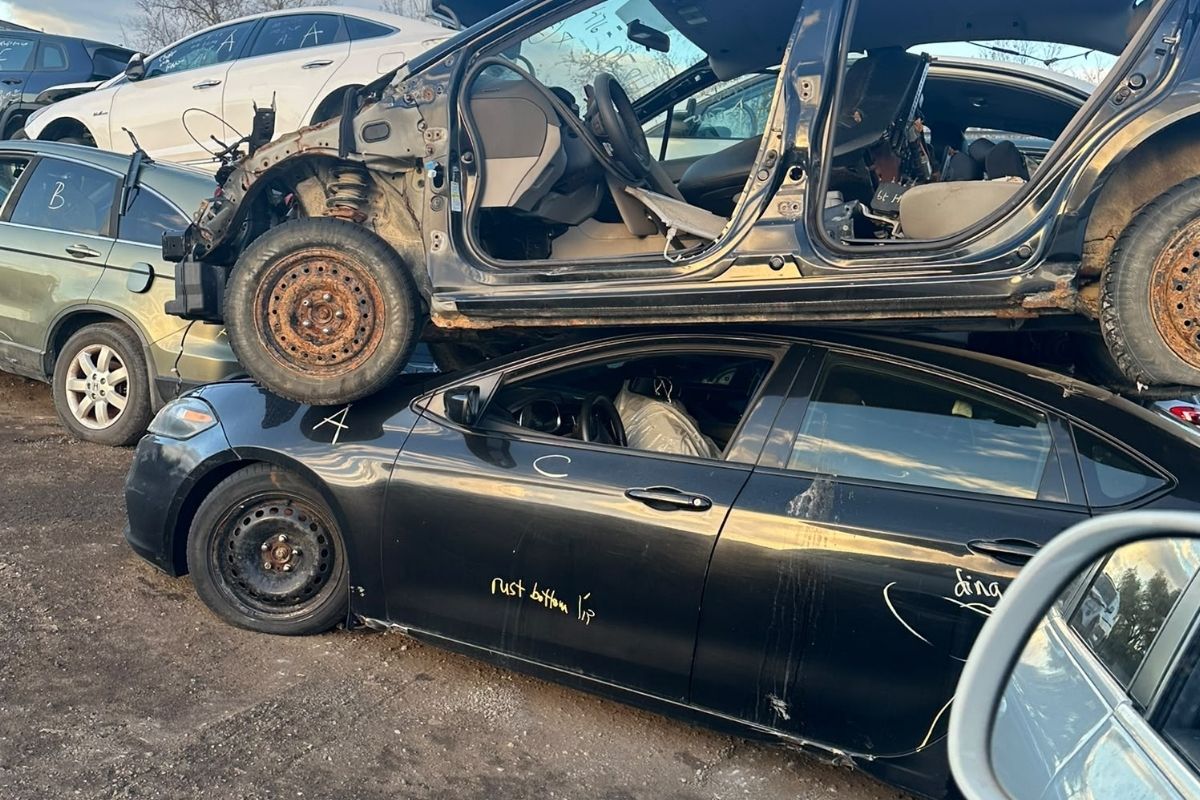
At this point, the vehicle may look very different. Its engine, battery, wheels, interior components and other recoverable parts may already have been removed.
What remains is largely the vehicle’s metal body, along with some materials that may need further separation.
Before crushing, shearing or shredding, the vehicle must meet the applicable preparation requirements.
Under Ontario Regulation 347, this includes removing batteries, lead-containing battery cable connectors, mercury-containing electrical switches, fluids, tyres, lead-containing tyre weights and asbestos waste.
The vehicle is then ready for the next stage of metal recovery.
7. The Car Body Is Crushed and Shredded
Once the necessary preparation is complete, the remaining car body can be reduced in size.
Depending on the equipment available, the recycling facility may use an industrial vehicle crusher to compact the body. This makes it easier to store, transport and feed into larger processing equipment.
The compacted vehicle body may then be sent to an industrial shredding facility.
Large shredders break the material into smaller pieces, making it easier to separate and recover different metals.
It is important to understand that crushing and shredding are two different processes:
- Crushing: Reduces the overall size of the vehicle body.
- Shredding: Breaks the material down into smaller pieces for further separation.
Not every auto recycling facility performs both processes on-site. Depending on its equipment and operations, a prepared vehicle body may be transported to another processing facility.
8. Separate Different Metals
Once the vehicle body has been shredded, the resulting material contains different types of metal.
Steel and iron generally make up a large proportion of the metal recovered from vehicles. Aluminium, copper and other materials may also be present.
Specialised sorting equipment helps separate these materials into different metal fractions.
| Separation method | What it does |
|---|---|
| Magnetic separation | Uses magnets to attract and separate ferrous metals such as iron and steel. |
| Eddy current separation | Uses electromagnetic forces to separate many non-ferrous metals, particularly aluminium. |
| Mechanical sorting | Separates materials based on their size, shape and physical characteristics. |
| Additional material sorting | Helps separate remaining metal fractions and other recovered materials for further processing. |
Once separated, the recovered metals are prepared for transport to suitable metal processing facilities.
What Happens to the Recovered Metals?
The recovered metals can be processed and used as secondary raw materials in manufacturing.
For example:
- Steel and iron: Can be used in construction, machinery and the production of new metal products.
- Aluminium: Can be processed for use in vehicle components, construction materials and packaging.
- Copper: Can be recovered and used in electrical products, wiring and other manufactured goods.
The final destination depends on the quality, grade and composition of the recovered material.
This is one of the main reasons end-of-life vehicle recycling is important. Instead of allowing an unwanted car to become uncontrolled waste, valuable materials can be recovered and returned to manufacturing supply chains.
9. Send Other Recoverable Materials for Recycling
A vehicle contains much more than metal. It also includes rubber, plastics, glass, foam, textiles and other materials.
Some of these materials are separated during dismantling, while others may be recovered during further processing.
Depending on their condition, composition and the recycling options available, they may be sent through different recovery channels.
| Material | What happens to it? |
|---|---|
| Tyres | Sent to appropriate tyre recovery and recycling channels. |
| Lead-acid batteries | Transferred to battery recycling facilities for material recovery. |
| Glass | May be separated for specialised glass recycling where suitable facilities are available. |
| Plastics | Sorted by material type where possible and sent for suitable recycling or recovery. |
| Rubber | May enter rubber recovery processes depending on its condition and composition. |
| Automotive fluids | Sent for re-refining, treatment or approved disposal, depending on the fluid. |
| Copper wiring | Recovered and processed as secondary metal. |
Not every material can be recycled economically or through available facilities. Some components are made from mixed materials that are difficult to separate, while others may be too damaged or contaminated for reuse.
The amount recovered will depend on the vehicle’s condition, material composition and the processing options available.
10. Recovered Materials Enter the Manufacturing Chain
This is the final stage in the journey of a scrap car.
Once the vehicle has been dismantled, depolluted and processed, its recovered materials are sent to different destinations.
Reusable vehicle parts may be sold to customers and repair businesses. Recovered metals are sent to metal processors, where they can be prepared for use in manufacturing.
These materials may eventually become part of products that have nothing to do with the original vehicle.
For example, steel recovered from an old car could be processed for use in construction or industrial manufacturing. Recovered aluminium may be used in new vehicle components or other manufactured products.
Although the original car is no longer recognisable, many of its materials can continue to serve a useful purpose.
This is what makes responsible auto recycling different from simply dumping an unwanted vehicle. It creates opportunities to recover useful resources and reduce the amount of material sent to disposal.
Why Responsible Scrap Car Recycling Is Important in Ontario
End-of-life vehicle recycling is about more than getting rid of an unwanted car. It is also about recovering useful materials and ensuring that potentially harmful components are handled properly.
There are several reasons why responsible vehicle recycling matters.
1. Reduces the Need for New Raw Materials
Recovering steel, aluminium and copper from old vehicles provides secondary raw materials that can be used in manufacturing. This helps reduce the need to rely entirely on newly extracted resources.
2. Helps Prevent Environmental Contamination
Engine oil, coolant, fuel and other automotive fluids can contaminate soil and water if they leak. Proper depollution and material handling help prevent these substances from entering the environment.
3. Gives Useful Car Parts a Second Life
Many vehicle components remain usable even when the car itself is no longer roadworthy. Recovering suitable parts gives vehicle owners and repair businesses access to replacement components.
4. Keeps Unwanted Vehicles Out of Uncontrolled Waste Sites
Old vehicles contain different materials that require different handling methods. Sending them through appropriate recycling channels helps ensure they are processed in a more organised and responsible way.
5. Supports a Circular Use of Materials
A vehicle doesn’t have to be the end of the line for its materials. Reusable parts, metals, batteries, tyres and other recoverable components can enter different recovery and recycling streams.
How to Choose the Right Scrap Car Recycling Company in Ontario
Choosing where your unwanted vehicle goes is an important part of the recycling process.
Some companies arrange vehicle collection and transportation but may not carry out dismantling or material recovery themselves. The vehicle may be transferred to another recycling or processing facility.
Before arranging scrap car removal, it is worth asking a few questions:
- Proper handling: Where will the vehicle be taken after collection? Does it enter an appropriate recycling and processing channel?
- Transparent pricing: Is the quote based on the actual condition of the vehicle? Are towing costs included?
- Ownership transfer: Will the company follow the correct vehicle ownership transfer process and provide the necessary transaction records?
- Environmental handling: How are fluids, batteries, tyres and other hazardous components handled?
- Parts recovery: Are suitable components assessed for reuse before the remaining vehicle body is processed?
A responsible company should be able to explain its collection process and where the vehicle goes after pickup.
Conclusion
Scrap cars have more value than many people realise. Even when a vehicle is no longer roadworthy, its usable parts, steel, aluminium and other recoverable materials can still serve a purpose.
Every stage of the recycling process plays an important role, from collecting the vehicle and removing hazardous materials to recovering reusable parts and processing scrap metal.
Choosing a responsible auto recycler is an important first step when getting rid of an unwanted, damaged or non-running vehicle.
Greenway Auto Recycling has been helping vehicle owners with scrap car removal and vehicle recycling since 2002. Our team makes the removal process straightforward while helping unwanted vehicles enter appropriate recycling channels.
Have an old or unwanted vehicle? Contact Greenway Auto Recycling to arrange scrap car removal and get a quote for your vehicle.