Introduction
Car glass looks tough and complex. Yet once a vehicle reaches its end, the same glass starts a new life in surprising ways. Many people do not know that a large part of old auto glass turns into new bottles, jars, tiles, and even fresh window panels. The process behind it is not simple, but it is very smart. Keep reading because this full cycle helps cut waste in landfills and supports cleaner cities. This also keeps the need for new raw material low, which saves energy. When you look at it closely, you realize how much value sits inside a car that is no longer on the road.
Searches like ‘how recycled car glass is reused’ are rising because people want to understand how recycling centres handle heavy glass waste. This guide breaks it down step by step so readers can understand what happens from the time a car is collected to the moment the glass turns into fresh products again.
What Happens to Car Glass After a Car Reaches the End of Its Life?
The car glass looks clean, but it has layers. Windshields have two sheets of glass with a plastic sheet in between. Side windows are tempered glass. All this needs careful handling. When a car reaches a recycling yard, the team removes glass with special tools. They try to keep each sheet as intact as possible. This makes sorting easier later.
Windshields and windows are stored in bins that keep them safe from moisture. Dust and mud from the car should not mix with the clean pieces. The cleaner the glass remains at this stage, the easier it becomes to turn it into new products.
How Recycling Centres Sort and Clean Old Auto Glass?
This step decides the final quality. Auto glass cannot go straight into a furnace because it carries small bits of sealant and plastic. So recycling staff sort the glass type first. Windshields go in one pile. Side windows go in another. If there are sunroof pies, they go in a separate container.
After sorting, the glass moves to the cleaning area. Machines remove rubber parts and metal clips. A second machine removes tiny dirt particles. Windshield glass still has a plastic layer that sticks firmly between the sheets. This is separated using heat and gentle pressure. Once all parts are off, the glass is ready for crushing.
The goal at this stage is to bring the glass as close to pure form as possible. Buyers of recycled glass want fewer impurities. This gives them stronger batches for new bottles and window sheets.
Also Read: 10 Mistakes to Avoid When Dealing With an Old or Broken Car in Ontario
Crushing and Turning Car Glass Into “Cullet”
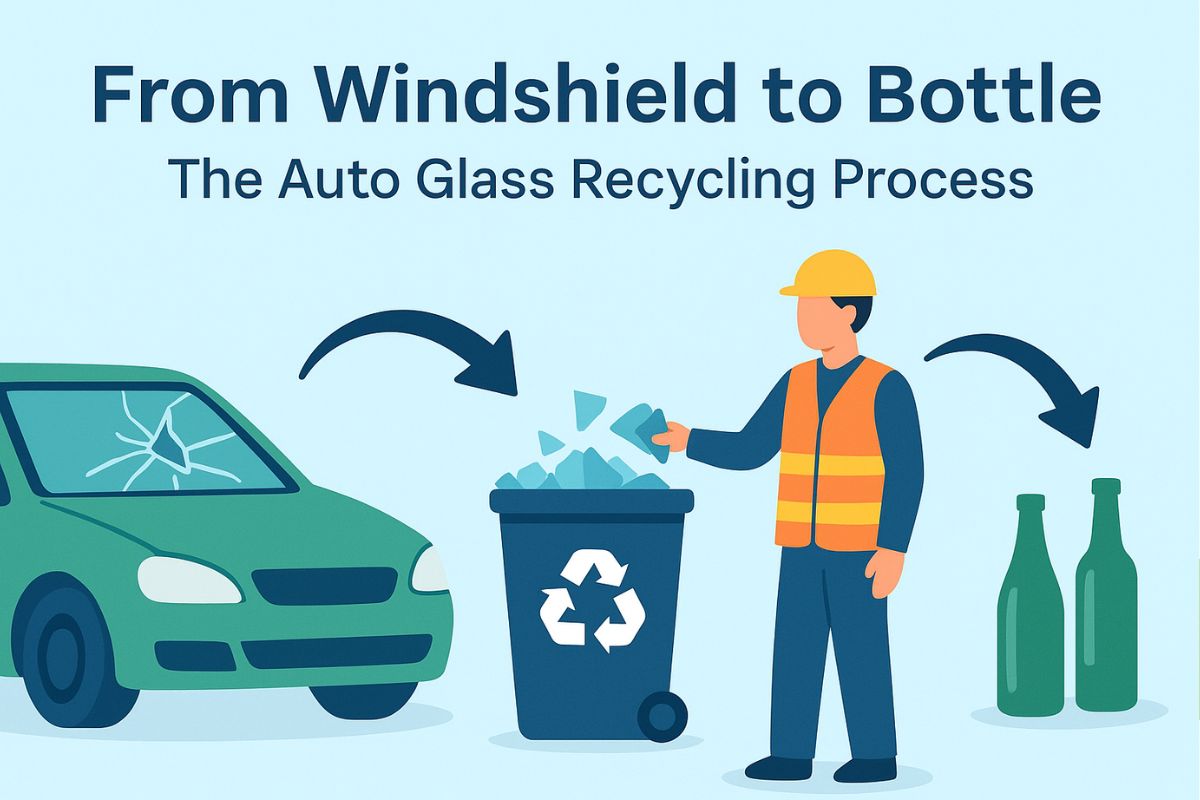
Once the glass is clean, it enters a crusher. The machine breaks it into small, sharp pieces that look like sand. These small pieces are called cullet. Cullet is the main ingredient for making new glass.
Both bottle makers and window makers prefer cullet because it melts faster than fresh raw material. This helps them save energy. It also lowers carbon emissions. Many factories now use a high percentage of cullet in their batches because it gives steady results.
Quality control staff check each batch. They make sure the cullet has the right size and contains no plastic. If needed, the batch goes for another round of cleaning. Only then does it move to the furnace.
How Cullet Melts and Turns Into Bottles?
Bottle makers heat cullet in large furnaces. The temperature goes very high. At this point, the cullet becomes a thick liquid. Workers feed this liquid into moulds that shape it into bottles, jars, and containers.
What many people find surprising is that glass never loses quality, no matter how many times you recycle it. So a crushed windshield can become a food-grade bottle. The entire process saves sand, soda ash, and limestone because cullet replaces a major part of the fresh raw material.
Factories choose cullet from auto glass, especially for strong bottles that hold drinks or chemicals. The glass in windshields is already high quality. So the final bottles also turn out consistent and clear.
How Recycled Car Glass Turns Into New Window Sheets?
Window makers also use cullet. The difference lies in how they shape the final product. They melt cullet along with a small amount of fresh material. The melted mix moves onto a flat surface where it spreads and cools slowly. This forms a smooth sheet.
These sheets then go through a heating process to make them tougher. Some go through lamination. Others are tempered. The steps depend on the type of window needed, such as home windows or commercial building windows.
Recycled cullet helps these companies save money and energy. It also keeps the supply chain steady. This is very important in the construction field, where demand for glass rises every year.
Why Car Glass Is Perfect for the Circular Economy?
Car glass is strong and pure. These two qualities make it perfect for reuse. Unlike some mixed waste items, glass comes back into the cycle without losing clarity or strength. The recycling process supports a circular economy where products re-enter the system again and again.
When people search for terms like “benefits of auto glass recycling” or “why car glass should be recycled”, they want clear reasons. Some of the strongest reasons include steady savings in energy, lower landfill waste, and lower demand for raw mining resources.
Auto recycling centres in Ontario already push this cycle by sending cullet to local glass plants. This reduces long-distance transport. It also supports local jobs.
Common Uses of Recycled Auto Glass
Recycled auto glass enters many industries. Some use it for bottles and windows. Some turn it into tiles. Some even use it for road base material after mixing it with other aggregates.
Here are common uses explained in a simple format
- Bottles for food and drinks
- Jars for cosmetic products
- Window sheets for homes and offices
- Tiles for interior design
- Abrasive material for cleaning tools
- Road building mix, when processed with other crushed material
The wide use shows how flexible auto glass becomes after recycling. It also shows how much waste we avoid putting in landfills.
How Ontario Drivers Support The Recycling Chain?
People do not always realize that they play a role. When an old vehicle sits in a driveway, it blocks the recycling cycle. But when the car reaches a certified recycler, the glass, metal, and plastic enter the system.
Many Ontario drivers search for “scrap car removal” or “where to recycle my old car”. These choices support the full recycling chain. Once the car enters a licensed yard, the team breaks it down safely. The car glass then enters the sorting and crushing line. From here, it moves to glass plants that turn it into new products again.
Conclusion
Recycled car glass goes through many steps before becoming a new bottle or window. It is sorted, cleaned, crushed into cullet, and then melted into fresh products. This process helps save raw material and keeps waste low in Ontario. If you have an unwanted vehicle and want to send its material back into the useful cycle, Greenway Auto Recycling handles the entire process with care. They also help with plate return and make the recycling experience smooth for vehicle owners.