Introduction
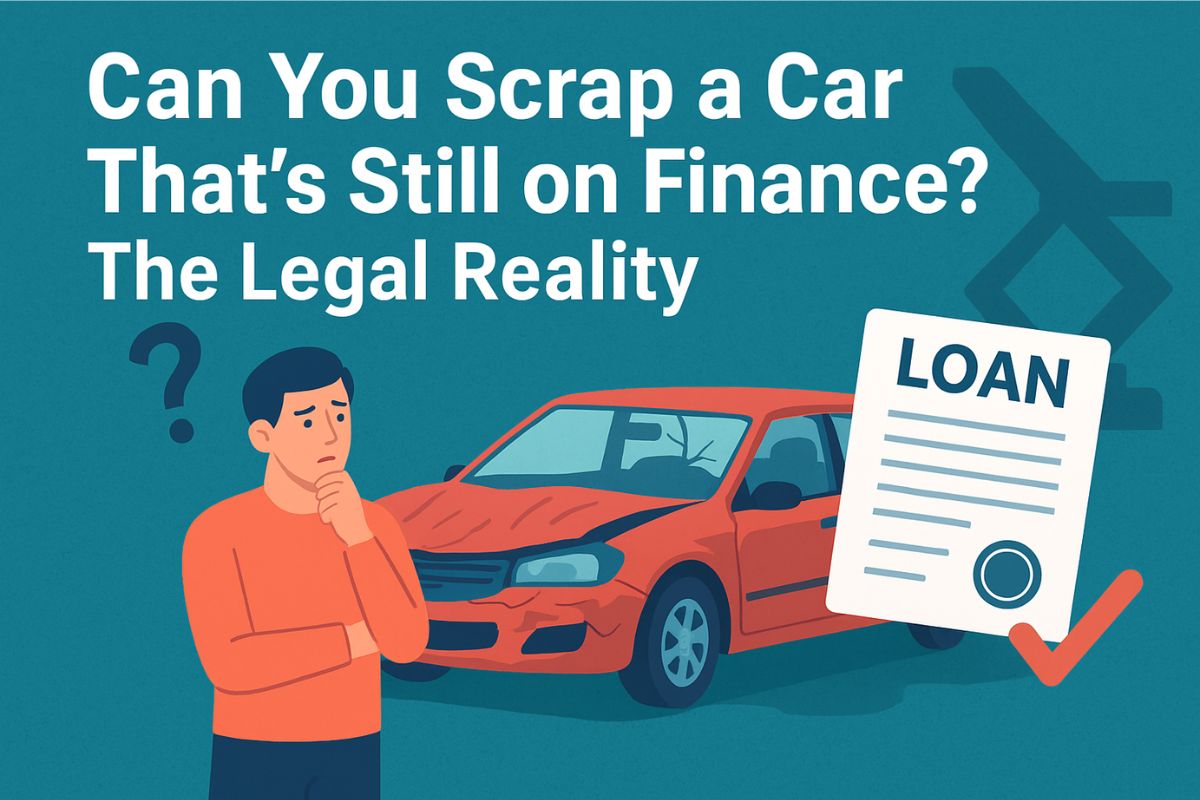
Many car owners in Ontario reach a point where the repair bills keep rising, and the car feels like a burden. Sometimes the car is damaged after a crash. Sometimes it does not pass basic checks and needs heavy work. In these moments, a common question comes up — can you scrap a car that is still under finance? It sounds simple at first, but the answer is tied to legal rules and lender rights. Scrap yards cannot take in a financed car without proper steps because the lender still owns it until the loan is cleared. So if you are stuck with a car that is unsafe or too costly to fix, you need to know what the law says and what options you can use. The goal is to help you avoid trouble and make the right move with clear steps that fit real Ontario rules.
Who Owns a Financed Car?
A financed car feels like your own, but legally, the lender owns it until the loan is fully paid. You have the right to use the car, but not to sell or scrap it without their approval.
Because of that, you cannot treat the car like you own it fully. You cannot sell it. You cannot scrap it. You cannot hand it to a yard for parts. Every finance deal carries this rule, and yards are aware of it. They check the VIN because removing a financed car without the lender’s permission can cause legal trouble for everyone involved.
Why You Cannot Scrap a Car Without Clearing the Loan?
A scrap yard will refuse the car the moment it sees an active loan on the title. The reason is simple. The lender still owns the car, and the yard cannot take property that belongs to someone else. Even if the car is not running or is fully damaged, the title rules still apply.
If you try to scrap the car without telling the lender, you can face serious issues. The lender can mark it as an illegal disposal. They can charge you for the full loan amount at once. They can also take legal action for the disposal of secured property. This is why the process must be done the right way.
Will Lenders Allow You to Scrap a Car on Finance?
In some cases, lenders give written permission, especially when repairing the car makes no financial sense. The lender may send an inspector or may ask for a repair estimate. If the car is a total loss from an accident and insurance is involved, the lender is paid first from the insurance payout, and the rest goes to you.
If the lender approves scrapping, they will mark it in writing. This letter is key. The scrap yard will accept the car only after seeing this proof. Without this letter, the yard cannot move forward.
What You Should Do If Your Financed Car Is Damaged Beyond Repair?
Here is the practical flow many Ontario drivers follow when the car is not roadworthy anymore.
Step 1: Contact the lender
Tell them the real condition of the car. Explain what repairs are needed. Mention if the car is sitting at a repair shop or at home. Many lenders deal with these issues often, so the process is not unusual for them.
Step 2: Collect proof
The lender may ask for photos or a repair quote. A repair shop bill helps a lot. If the car is written off by insurance, then the insurance report works as proof.
Step 3: Request written approval
If the lender agrees to let you scrap the car, they will give you a written letter. Keep it safe. Scrap yards will ask for it.
Step 4: Clear any pending steps
Sometimes the lender may want you to close the loan before scraping. If the loan amount is small, you can pay it off and release the lien. Once the lien is removed, the car becomes fully yours, and scrapping becomes easy.
Can You Scrap a Car That is Under Lease?
A leased car is even stricter. The leasing company owns the car fully. You only use it for the lease period. Because of this, you cannot scrap it under any condition. If the car is damaged in a crash, you must report it to the leasing company and the insurance provider. The insurance payout goes to the lease company.
If the car needs repair, you must follow the lease rules. Trying to scrap a leased car leads to heavy penalties. So in lease cases, there is no option to scrap unless the company itself decides to retire the vehicle.
Also Read: How to Sell a Car in Ontario Using a Power of Attorney
Does Insurance Help When the Car Is a Total Loss?
If your financed car is declared a total loss after an accident, the claim money first goes to the lender. If the payout is equal to the loan, the loan closes. If the payout is lower, you must pay the leftover amount. Many people take gap insurance for this reason because it covers the loan shortage.
After the settlement, the car usually goes to an insurance auction or a yard that handles salvage units. You do not handle the scrapping directly in total loss cases because insurance takes over the process.
What If Repairs Cost More Than The Car’s Value?
Sometimes the car is not declared a total loss, but the repair cost is higher than the value. You may feel tempted to scrap it right away. The lender may still not allow that because the car is not officially a total loss. In such a case, you can request a review. You can also ask for a lower settlement. Some lenders accept lower payouts if the car is very old.
If nothing works, you can pay off the loan and release the lien. Once the lien is removed, the car is yours, and you can scrap it with no issues.
The Only Safe Way to Scrap a Car on Finance
Scrapping a financed car in Ontario is legal only when one of these points is true.
- The loan is fully paid, and the lien is removed.
- The lender gives written permission.
- Insurance takes over after a total loss and handles the disposal.
If none of these are in place, do not move ahead. Scrapping without following the rules can lead to loan recovery action. Scrap yards also refuse these cars for their own legal safety.
Common Myths About Scrapping a Financed Car
Many myths float online and confuse people. Here are the main ones.
Myth: :1 If the car is dead, you can scrap it anytime
Even a dead car has a lien if the loan is open. The lender’s right stays until the loan closes.
Myth 2: Scrap yards do not check
Licensed yards in Ontario always check the VIN. They follow strict rules. They cannot accept a car with an active lien.
Myth: :3 Small loans do not matter.
Even if the leftover loan is tiny, the lien still blocks scrapping. The lender must clear it first.
Also Read: Top 10 Common Myths About Scrapping Your Car in Canada
When Scraping Makes Financial Sense
Scrapping makes sense when the repair cost is too high, or the car has no road value left. Some older cars need constant fixes, and owners want to stop spending money. If the loan balance is low, you can pay it off and release the lien. Then you can scrap the car and use the payout for your next move. This is the fastest way in many cases.
Some owners also scrap their cars when they want to avoid long-term storage or towing bills. If the car is already sitting in a yard after an accident, it may cost you daily fees. Clearing the loan and scrapping the car can stop these charges.
You can also mention a service, like scrap car removal, which some owners use when they want a quick pickup after clearing the loan or getting written approval.
Conclusion
You can scrap a financed car, but only when the loan is cleared or the lender gives written permission. The lender owns the car until the lien is removed, so you must follow the proper steps. If insurance declares a total loss, the process becomes easier because the payout settles the loan first. When the car is beyond repair, and you want a smooth pick, you can contact a licensed yard in Ontario. Greenway Auto Recycling can guide you through the process and help once the lien is cleared or the lender gives formal approval.