Introduction
Finding an abandoned vehicle on your land can quickly turn from a small concern into a serious problem. Many Ontario property owners face this situation without knowing what to do next. A car may appear overnight. There is no note and no sign of the owner. Days pass, then weeks, and the vehicle still does not move. The vehicle does not move. At that point, confusion sets in. Can you tow it? Can you sell it? Can you push it onto the street? The wrong decision can lead to fines or legal trouble, while the right one protects you from unnecessary problems. This guide explains the full legal process in Ontario in clear and simple terms. It focuses on real steps, not guesses. By the end, you will know exactly how to handle the situation without risk.
In many cases, the vehicle is not completely abandoned. It may belong to a former tenant, a visitor, or even a neighbour. Property owners often assume they can have the car removed immediately, only to discover that Ontario’s rules are more complicated
What Is an Abandoned Car on Private Property in Ontario?
Ontario rules focus on consent and use. If a vehicle sits on your property without your permission and shows no sign of active use, it may qualify as abandoned.
The condition of the vehicle matters more than time. Flat tires. Broken windows. Expired plates. Heavy rust. These signs often support abandonment. A car does not need to sit for months to create a legal issue.
Private property includes driveways, apartment parking lots, commercial land, and vacant lots.
Why You Should Not Ignore an Abandoned Vehicle
Ignoring the problem rarely makes it go away. Over time, the vehicle may leak oil or fuel. Rodents may move in. Neighbours may complain. Some cities issue bylaw notices if the car becomes a safety concern.
There is also legal exposure. If someone trips near the vehicle or gets hurt, questions may arise about responsibility. Acting early reduces risk and keeps control in your hands.
Understanding Abandoned Vehicle Laws in Ontario
Abandoned vehicle laws in Ontario come from both provincial rules and local bylaws. The Highway Traffic Act sets general rules, but each city controls enforcement.
On private land, you cannot claim ownership of the vehicle. You cannot sell it. Do not take parts from it. Do not move it to public roads. Any of these actions could lead to fines, penalties, or other legal problems.
Cities require proof that the vehicle is abandoned before approving removal. This protects both the property owner and the vehicle owner.
Step-by-Step Checklist to Handle an Abandoned Car Legally
This checklist answers the most searched question. What to do with an abandoned car on your property in Ontario.
Step 1. Confirm the Vehicle Is Not Authorized
First, make sure the vehicle does not belong to a tenant, guest, or employee. Check lease agreements and ask neighbours whether they recognize the vehicle. Sometimes the answer is simple.
Look for plates or permits. Take photos. Note how long the vehicle has stayed.
Step 2. Record the Vehicle Details
Write down the plate number if visible. Take clear photos from multiple angles. Note the condition of the car.
This record helps when dealing with the city or bylaw officers.
Step 3. Contact Local Bylaw Services
Call your city’s bylaw office and report the abandoned vehicle. Explain exactly where the vehicle is located and how long it has been there. Most Ontario cities send an officer to inspect the vehicle.
In larger cities such as Toronto, Mississauga, and Brampton, bylaw officers often receive many complaints, so response times can vary depending on the season and workload.
Step 4. Allow the Notice Period
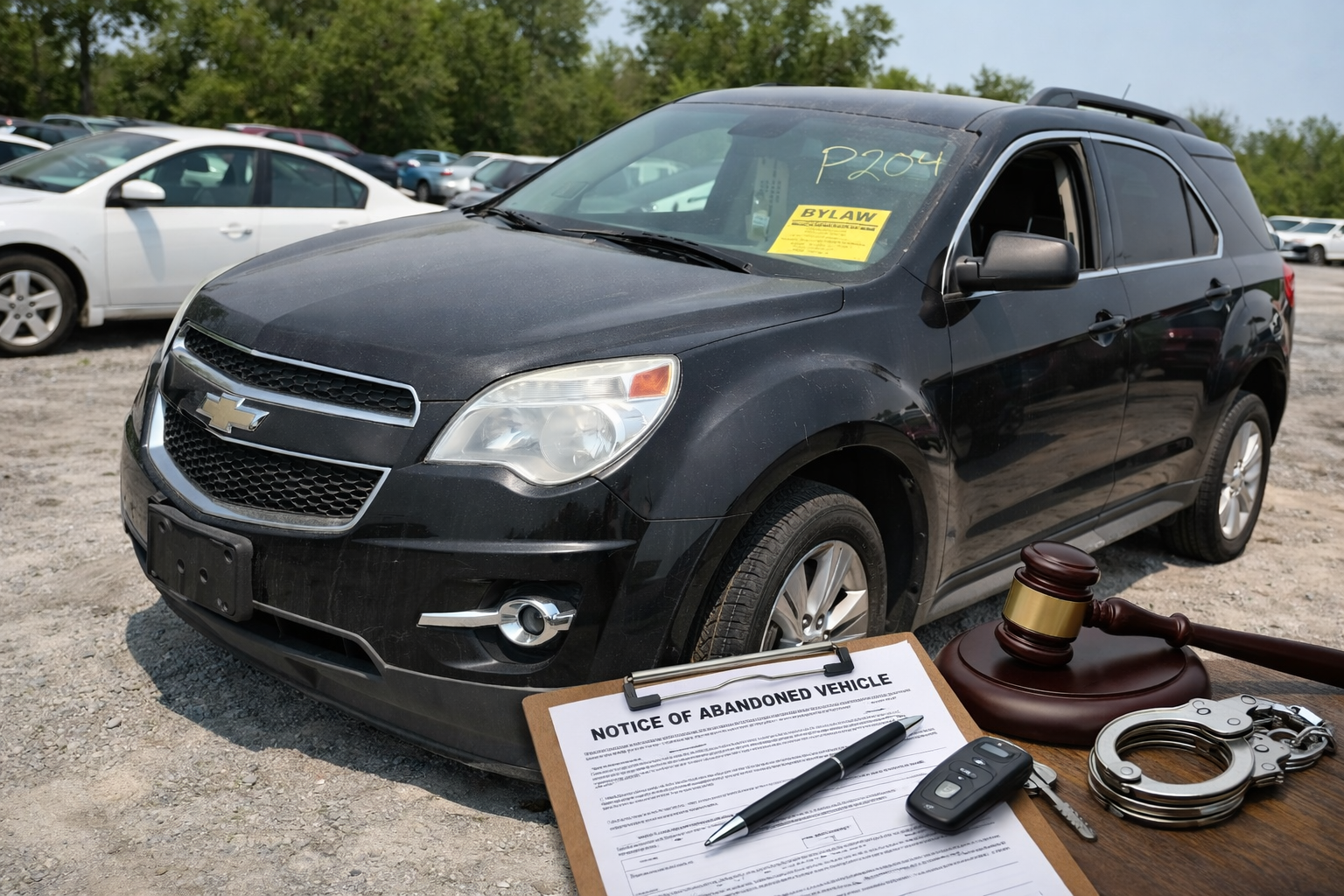
If the officer confirms abandonment, they usually place a notice on the vehicle. This gives the owner time to remove it.
Notice periods vary by city. Some allow three days. Others allow longer.
Do not touch the vehicle during this time.
A Toronto landlord discovered an unfamiliar sedan parked in the building’s private parking area. The vehicle remained there for more than a week, and nobody claimed it. After documenting the condition of the car and contacting local bylaw officials, the owner received approval for removal, and the vehicle was taken away a few days later.
Step 5. Receive Approval for Removal
If the vehicle remains after the notice period, the city may approve removal. Sometimes the city arranges towing. Sometimes they allow the property owner to proceed.
When Police Should Be Involved
Police involvement is limited. They usually step in only if the vehicle appears stolen, unsafe, or linked to criminal activity.
A missing vehicle identification number (VIN), signs of theft, or blocked emergency access may justify contacting the police. For most cases, bylaw offices handle everything.
Why You Should Never Move the Vehicle Yourself
Many owners think about pushing the car onto the street. This is a serious mistake. Doing so can count as illegal dumping.
You also cannot strip parts or attempt to sell the vehicle. Ownership does not transfer simply because the car sits on your land.
How to Remove an Abandoned Car in Ontario Safely
Once the city authorizes the removal, you can arrange for the vehicle to be taken away. Ontario rules allow the use of approved services.
Licensed towing or recycling services handle documentation properly. This protects you if the owner comes forward later. In many cases, a scrap car removal service can take the vehicle if it qualifies and approval is in place.
Who Pays for the Car Removal
Cost responsibility depends on city rules. Some cities charge the vehicle owner if they respond late. Others may require the property owner to pay up front.
Some removal services charge nothing if the vehicle has scrap value. Always confirm terms before proceeding.
How Long Does the Entire Scrap Car Removal Process Take
The timeline depends on how quickly each legal step moves forward. In most Ontario cities, the full process takes one to three weeks. The first few days are usually spent confirming that the vehicle is abandoned and reporting it to local bylaw officers.
After inspection, the city usually places a notice on the car. This notice period often lasts between three and ten days. If the vehicle stays after that, approval for removal follows. Once approved, removal itself usually happens within one or two business days.
Winter weather can also slow the process. Snow-covered licence plates, frozen locks, and limited access to the vehicle sometimes delay inspections and removal.
How to Prevent Abandoned Cars in the Future
Prevention starts with clarity. Mark private property clearly with visible no parking or permit only signs. For rental or commercial properties, include parking rules in written agreements. Use numbered or assigned parking spaces where possible.
Install gates or controlled access in high-risk areas. Act fast when an unknown vehicle appears. Early reporting makes enforcement easier. The longer a car sits, the harder it becomes to resolve. Clear rules and quick action reduce repeat issues.
Conclusion
Handling an abandoned car on private property requires patience and the right steps under Ontario law. Confirm that the vehicle is abandoned, contact local bylaw officials, and wait for approval before taking further action. Avoid shortcuts that create risk.
Once removal is approved, working with professionals makes the process easier and safer. Greenway Auto Recycling helps Ontario property owners deal with unwanted vehicles after proper clearance. A careful approach protects your property and keeps problems from growing.