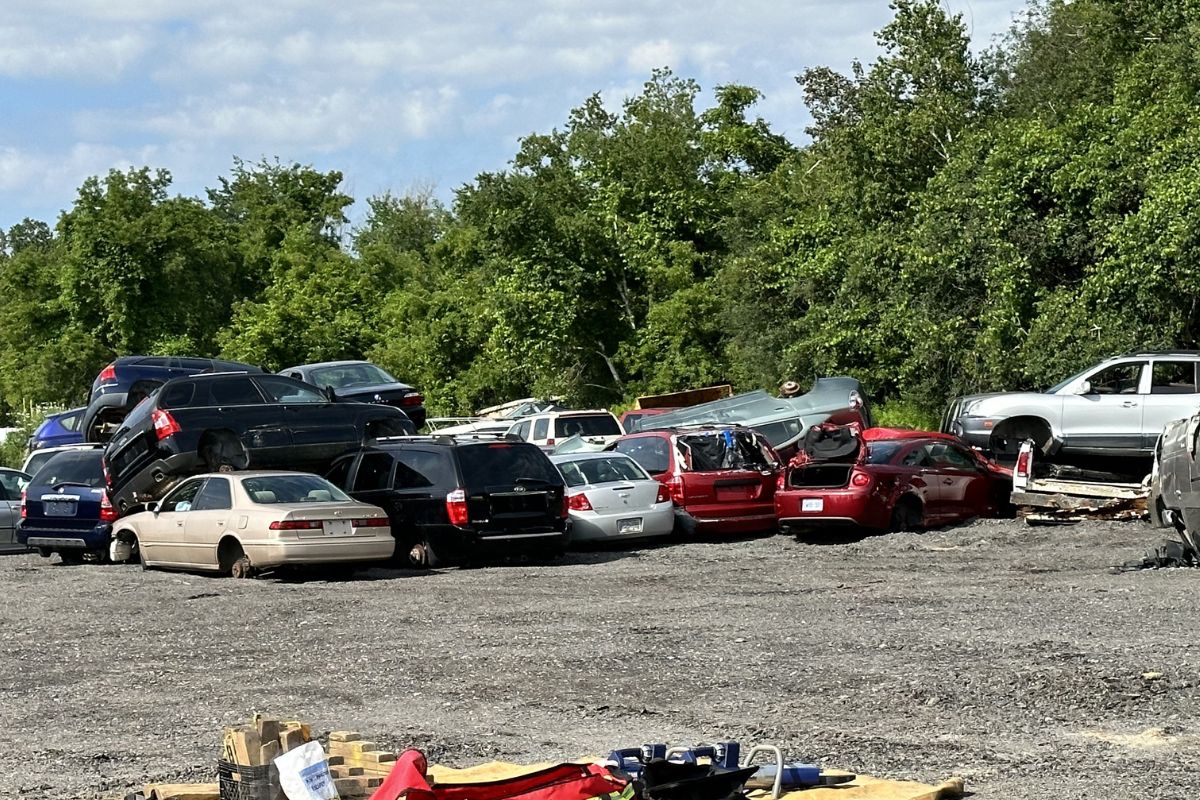
Many hybrid cars that once dominated Toronto’s streets are now reaching the end of their lifespan. What many drivers don’t realize is that even when a hybrid stops running, several valuable components inside it can still be worth recovering.
Hybrid cars once became a go-to choice for many Toronto drivers who wanted better fuel economy. Models like the Toyota Prius, Honda Civic Hybrid, and Ford Fusion Hybrid quickly filled city roads during the late 2000s and early 2010s. They delivered strong mileage and lower emissions, which made them attractive for daily commuting.
Today, many of those hybrids are more than ten years old. Battery performance begins to drop, electronics start failing, and repair costs climb fast. In many cases, a battery replacement alone can cost more than the car’s value.
Because of this, Toronto scrapyards are seeing a steady rise in aging hybrids. The interesting part is that even when these cars stop making sense to repair, several components inside them still carry real value in the recycling market.
Why Older Hybrids Are Now Entering the Scrap Market
Hybrid cars usually last a long time when properly maintained. Still, age brings certain limits.
Most hybrid vehicles entering scrapyards today fall into the 10 to15 year age range. Many of them have also crossed 250,000 to 350,000 kilometres.
The following issues often push owners toward scrapping their cars.
Common reasons hybrids get scrapped
- Battery failure
- Expensive inverter or electronic repairs
Reduced fuel efficiency - Rust or structural damage
- Transmission problems in high-mileage vehicles
When drivers begin researching options like scrap hybrid car Toronto or sell an old hybrid car for scrap, the vehicle usually already needs a major repair.
The Three Hybrids Most Commonly Seen in Toronto Scrap Yards
Certain models appear far more frequently in hybrid recycling facilities. The following table shows the vehicles that dominate the scrap market.
| Hybrid Model | Years Most Commonly Scrapped | Main Reason |
| Toyota Prius | 2007 to 2013 | Battery aging |
| Honda Civic Hybrid | 2006 to 2012 | Battery and electronics |
| Ford Fusion Hybrid | 2010 to 2016 | Battery or drivetrain wear |
Each model has different components that recyclers care about.
Also Read: Scrapping Electric and Hybrid Cars: What Makes It Different?
Toyota Prius: The Hybrid With the Strongest Scrap Demand
The Prius has been one of the most successful hybrid vehicles ever sold. Because so many were produced, they now appear frequently in scrap yards.
People searching for scrap Prius Toronto often want to know if their car still carries value after the battery fails.
The answer is usually yes.
Several Prius parts remain useful even when the vehicle stops operating properly.
Prius components that still hold value
- Hybrid battery modules
- Inverter and power control unit
- Electric drive motor
- Catalytic converter
- Aluminum wheels
One reason Prius cars attract attention in the scrap market is the catalytic converter. Prius converters contain higher concentrations of precious metals compared with many traditional vehicles.
Recyclers often recover materials such as platinum, palladium, and rhodium from these converters. That alone can increase the vehicle’s scrap value.
Honda Civic Hybrid: Different Battery Situation
The Honda Civic Hybrid had a smaller market share than the Prius, but thousands were still sold across Canada.
Owners searching for scrap Civic Hybrid Toronto often discover that the battery market works a little differently for this model.
Civic Hybrid battery packs were generally harder to rebuild compared with Prius batteries. Many recycling facilities send them directly to hybrid battery recycling Toronto programs instead of refurbishing them.
Still, the car itself remains valuable as a parts source.
Parts commonly recovered from Civic Hybrid vehicles
- Hybrid control computers
- Starter generator system
- Transmission component
- Interior electronics
- Body panels and lighting assemblies
Because the Civic shares mechanical parts with the gasoline version, some components can still be reused in repairs.
Ford Fusion Hybrid: Newer but Increasing in Scrap Supply
The Ford Fusion Hybrid entered the market slightly later than the early Japanese hybrids. These cars are now reaching the age where scrapping is becoming more common.
Search trends for scrap Ford Fusion Hybrid in Toronto have increased in recent years.
Fusion hybrids differ in one important area. Many models use lithium-based battery systems, which require more careful recycling.
Despite that difference, these cars still contain valuable components.
| Fusion Hybrid Component | Why It Matters |
| Hybrid battery pack | Contains valuable metals |
| Electric drive motor | Reusable in repairs |
| Catalytic converter | Precious metal recovery |
| Aluminum suspension parts | Recyclable metal |
| Electronic modules | High demand in the used parts market |
Because the Fusion is a larger sedan, it also contains more recyclable metal by weight compared with smaller hybrids.
Hybrid Battery Scrap Value Explained
Many owners assume the battery determines the entire scrap value of the vehicle. In reality, the situation is more complicated.
The value of hybrid battery scrap depends on several factors.
Key factors affecting battery value
- Battery chemistry type
- Condition of individual modules
- Demand for refurbished batteries
- Current metal prices
A Prius battery with working modules may still be reused in refurbished packs. That increases its value.
Other batteries go directly to material recovery facilities, where metals such as nickel and cobalt are extracted. In that case, the owner usually receives less money for the battery itself.
Also Read: What Happens to Used Car Batteries in Canada?
Parts That Still Matter Before Scrapping a Hybrid
Before sending a hybrid car for recycling, owners often wonder whether they should remove parts themselves.
Sometimes removing small items makes sense. In other cases, it reduces the total scrap price.
The table below gives a simple overview.
| Component | Remove Before Scrapping? | Reason |
| Personal electronics | Yes | No value to recyclers |
| Infotainment units | Sometimes | Can sell separately |
| Alloy wheels | Sometimes | Resale value |
| Catalytic converter | Usually leave installed | Often included in scrap price |
| Hybrid battery | Leave installed | Requires proper handling |
Most owners receive a better offer when the vehicle remains complete.
Why Hybrid Recycling Is Growing Across Canada
Hybrid vehicles once represented a small part of the Canadian automotive market. That changed quickly over the last decade.
Thousands of hybrids entered Ontario’s road network. Many of them are now approaching the later stage of their life cycle.
Recycling companies have adapted to handle these vehicles safely.
Modern facilities now manage:
- Battery dismantling
- Metal recovery from electronic components
- Safe storage of hybrid systems
- Reuse of functioning modules
This growing system helps recover materials while reducing environmental waste.
When Scrapping Your Hybrid Makes Financial Sense
Drivers usually reach a point where repairing the car stops making financial sense.
Here are common signs that scrapping may be the smarter choice.
Warning signs
- Hybrid battery replacement required
- Major inverter or electrical failure
- Severe rust on the frame or suspension
- Multiple expensive repairs at the same time
When several of these issues appear together, owners often choose professional scrap car removal instead of investing further money into repairs.
Conclusion
Toronto’s scrap market for hybrid vehicles continues to grow as early models reach the end of their lifespan. Cars like the Prius, Civic Hybrid, and Fusion Hybrid may no longer deliver reliable performance once major components fail. Yet they still contain valuable materials and reusable parts that recycling facilities can recover.
Understanding which components still hold value helps owners make a better decision when it comes time to retire an aging hybrid.
For drivers in Ontario who are ready to move on from an old hybrid, working with experienced recyclers can make the process much easier. Greenway Auto Recycling brings more than twenty years of experience in the industry and understands how to handle hybrid vehicles responsibly while helping owners receive fair value for their cars.